Tuesday, May 27, 2014

Stride with the Pride: A Green and White Agro


Motivation

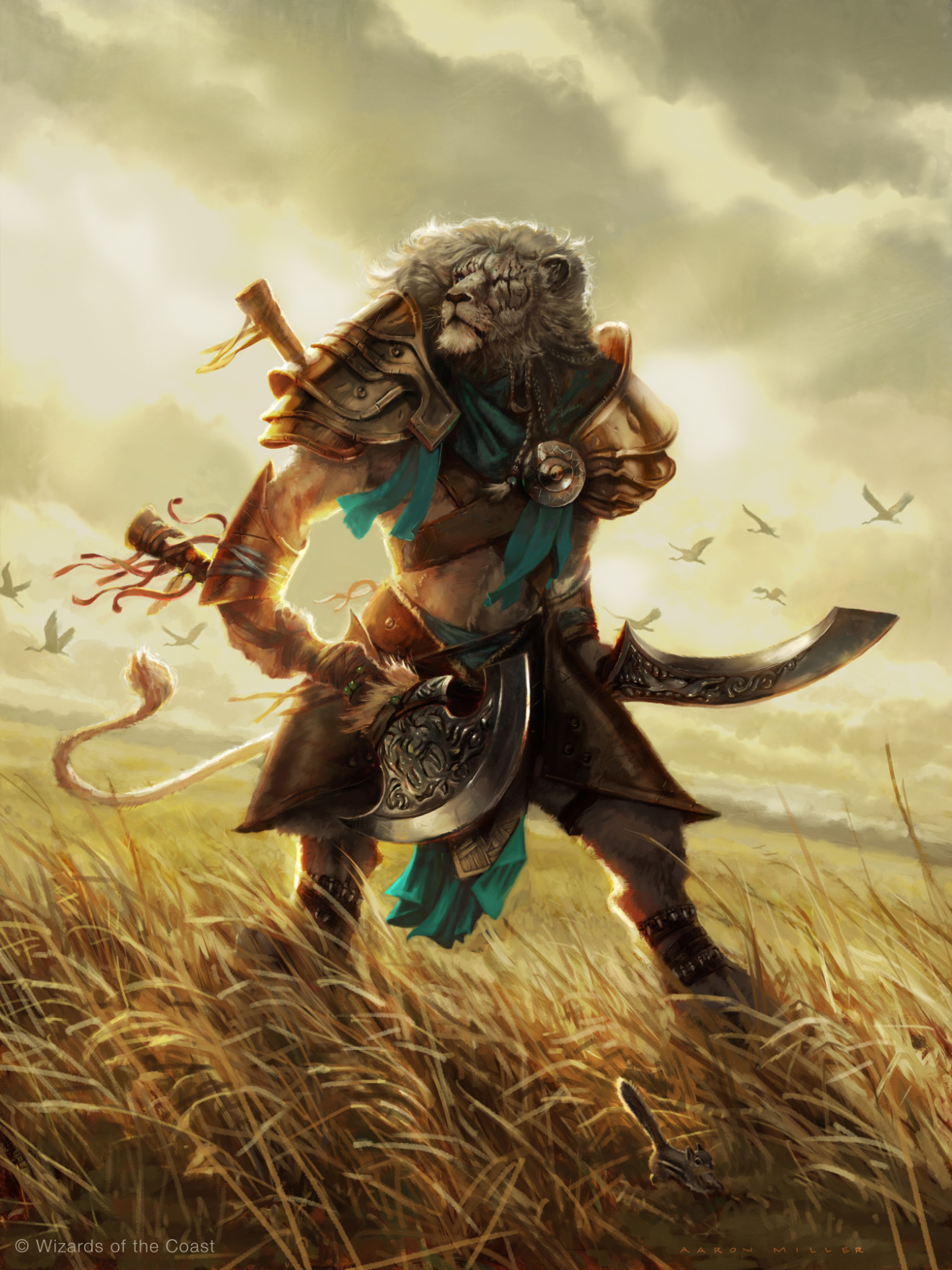
Focusing heavily on the combination of both the mechanics of Strive and Heroic, this unique Green and White agro deck focuses on placing as many +1/+1 counters on your creatures as fast as possible.  With Ajani and Brimaz on the forefront, they will help build up your front line and continue to dominate the battlefield.  This is certainly the most expensive deck I have built, currently ranging near $81, before I add in any other cards to help solidify the deck.

Deck Contents

Land (19)
Creatures (31)
Spells (10)
Total Cost: $80.99

Ways to Improve the Deck

Land
Creatures
Spells

Potential Sideboards:

Strategy of Play for Base Deck:

The deck runs strong with a ton of low mana cost creatures and the 4 Pheres-Band Trompers.  The Trompers are fantastic in this deck to help put pressure on your opponent.  Every time they untap, they gain a +1/+1 counter.  Costing 4 mana, they can essentially double themselves to 6/6 creatures by round 7, making them a great investment.  Ajani will help the deck, by either searching for creatures or placing 3 +1/+1 counters on your creatures.  Karametra, the weakpoint of the deck is nice to keep up with mana, but I would certainly replace her with either Elspeth or another Ajani.  Playing any of your Dawnbring Charioteers will create tension among your opponents, as they try to fight against your growing health pool and the impending threats of of 4/6 flyers (after one spell is cast on them). 

Conclusion

While the deck is pricey, it certainly function fine with 19 mana.  I would/will probably fill in the rest of the temples by replacing forests and look at adding a couple mana confluence, if the shock is not fully harmful.  In general, it is a strong deck that can overrun your opponent quickly, if you are allowed to get ahead in tempo.

All prices were checked at http://www.tcgplayer.com/.  Here you can browse for the price of cards and get a general idea of your deck/collection of cards.

Sunday, May 25, 2014

Khans of Tarkir Theories and Speculations


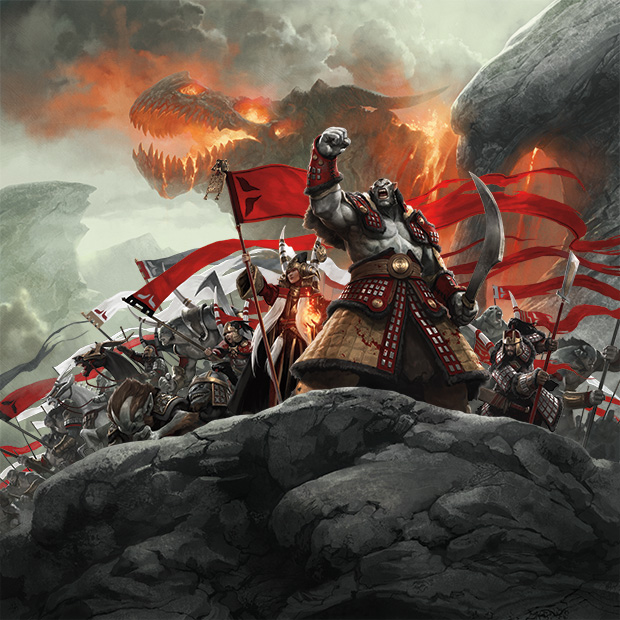
The name of the new block releasing this Fall is aptly labeled: Khans of Tarkir.  This set takes place on the Plane of Tarkir.  This plane is home to a Planeswalker named Sarkhan Vol, the Dracomancer. From what we have seen of Tarkir, it is a steppe like plane much like the steppes in Central Asia.  The interesting plot to this plane is that it is ruled by warlords and khans that had led Dragons to extinction and have finally become restless without any great hunts.  Sarkhan Vol worked as an agent for Nicol Bolas and was one of the key figures of releasing the Eldrazi.


This is all speculation from here on out, but all story, community speculations and my speculations were well researched.  This brings us to the first speculation of the block that the story line will have us returning to Zendikar.  The logical reasoning behind this comes from the speculative series naming: Khans of Tarkir, Warlords of Tarkir and finally Dragons of Tarkir.  The idea behind this story would be that within Khans of Tarkir, we would see the return of Sarkhan Vol coming back to his home plane and attempting to rally his tribe to dominate the other Khans.  In Warlards of Tarkir, Sarkhan Vol becomes a warlord and is now fighting officially against the remainder of Khans.  Quite possibly we could see other monstrous races show up at this time that are also vying for control.  Finally, in Dragons in Tarkir, we would see Nicol Bolas invade Tarkir and bring the dragons back to Tarkir or it could go the other way with Sarkhan Vol invading Zendikar to fight both Bolas and the Eldrazi.


What we do know about the set, thanks to the teaser, is that it has a "unique" block structure and something that has never been done before.  There has also been promises to bring back something that the community has been speaking out about.  Also keep in mind that the set is also mechanic drive and not flavor driven.  The block will be released as a Large, Small, Large, unlike the previous set Theros which was Large, Small, Small.  Not only will this create a heavy beginning and end, but it will also promise that the set will have utility and caters to the idea that the first and last sets of the block will contain most of the story, see above.  Now the promise of something that the community has wanted back has led to many people leading to the ideas of what will release with this new block.


The biggest outcry that people want in this new set are fetch lands, which could possibly be the big surprise.  People have also claimed that it could either be dual lands or snow lands  The reason behind this idea comes from the other idea that this set will feature 3-color wedges, like white, black and red.  3-color wedges create a demand for dual lands or double mana lands, because of the tight play required to make those decks successful.  Other people have speculated a possible dragon tribal set.  Other than those the three mechanics that have been met with popular demand have been: Banding, Bushido, a new mount system which could possibly function like banding or bestow and finally tribal cards.


What I hope comes out of this set are dual lands which would allow 3-color and 5-color decks to be competitive and different mechanics introduced throughout each set.  It would be fantastic to see four or five new mechanics come out in this set.  Body 2: My speculations and hopes Dual lands, working Tri-color decks, possible 5 color decks and different mechanics changes throughout the sets. Another thing to look forward to in this set, is that it pushes out Return to Ravnica and allows both Theros, M15 and Tarkir to dominate the new meta.  In between this set release, we will see one more set being released: Conspiracy, which seems catered to draft play.  We will also have access to one more duel deck: Cunning vs. Speed.


With the impending release of Conspiracy in two weeks we will see how draft picks will change for that format, but it will not affect standard play.  Interestingly enough, I am in love with the flavor of this block and the whole idea that we are getting the Mongolian Hordes and being war-like.  So combat will be more heavily focused in this set and it would not surprise me to see walls come back.  Another interesting thought that I adore is the three-wedge cards, it would be nice to see the return of Crosis, the Purge and other three-wedge cards that can expand the types of decks.  All in all, this is all just speculation until the spoilers start rolling in during July and August.

Friday, May 23, 2014

How DLC, DRM and Piracy Killed Video Games

I think we can all remember this debacle.

Every year there is a new Call of Duty that promises the new changes or self-proclaimed revolution to the industry and every year they release a game with handfuls of downloadable content (DLC), cut content and map packs.   The industry continues to promote the grand scale rip-off of every product because they are allowed to.  On top of DLC or even the promise of, promotes buyers to pirate the game, because gamers, PC users, are tired of paying $60 for half of the full product and then being charged $10 to $15 more for every other cut feature.  A fantastic example of cut content is Diablo III, where the Mystic Myriam was promised on release and then removed, due to the customization being labeled as "redundant". She was later released in Reaper of Souls as expansion exclusive content.  The demand for DLC is becoming a phenomena that started with the growth of Expansion Packs of the early 1990s.  These packs expanded on current content of the game and allowed players to play their older games through new content that either elaborated on story line arcs, multiplayer aspects or by adding new features into older game content.

Considered one of the greatest expansions in video game history.

Growing up in the '90s, I had access to what some people called the Golden Age of Gaming.  Before the internet we had to share games by lending physical copies.  During the mid to late 90s, CD burners were becoming more and more prevalent in society and they allowed us to copy games from one CD to another by copying an image from one CD and imprinting it on another CD.  The average speed for burning a game would be anywhere from one hour to two.  So we'd trod around ranting and raving about how great a game was and then went off playing multiplayer with our newly created CD.  This led to the very first protection video game companies were forced to enact: CD keys.  These unique keys would only allow one person to have an installation and any copy of that key would prohibit multiplayer unless everyone else had a unique CD key.  As the late 90s progressed it was a slow process for video game companies to keep up, so they would push CD-Rom burn protections and other precautions that would begin to dominate the environment.  What the world did not expect was the birth of the Internet.

A fitting picture that describes the main conflict with today's market.

The Internet had allowed people to share CD key generators, download links, hacks and cracks and other processes to copy their games or get them for free.  This was met with an ever expanding outlook of Digital Rights Management (DRM).  DRM has become so prevalent now in our society that people are stretching out to fight against it.  Examples of modern DRM are: Only-Online Play, Online Pass keys, "Leasing the software" and also limited installations. As DRM raised restrictions, game companies began to release DLC.  The first DLC on personal computers was for a strategy game called "Total Annihilation", a strategy game released in 1997, and they would release a new unit every month.  In 2002, this trend would change completely as Microsoft had released the first DLC to have a price tag attached to it.  The game was called Mech Assault, which focused on the Battletech or Mechwarrior Universe and functioned as a third person shooter.  Due to its huge success, other companies began to follow in suit as Mech Assault's success meant that their games could be successful by following this method.  One of my first frustrations with DLC came from Dragon Age: Origins.

Every pre-order promises goodies that reward people for purchasing the game early.  Good thing it alienates the other part of the community who did not pre-order.
Now don't get me wrong, I loved the original Dragon Age: Origins as a solid roleplaying game, but my major issue was the areas that would prompt you for a quest and later tease you that you can only access this area if you pay $10.  The frustration with that comes down with the core reasoning that I had spent $50 on a new game and then I am prompted after about an hour and half worth of play time that I need to spend $10 more to have access to all of the content available.  That alone leads to the problem of "pre-order" content and "on-disc" content that is locked.  "Pre-order" content has become one of the most aggravating forms of commercialism to happen to games.  Your choice as a gamer now is either pre-order and not have to shill out $10-$20 more or wait for a "complete" edition to come out.  That leads us to one important point of quality, if you do not pre-order, you do not receive the full game unless you pay an additional fee.  Therefore, most games now run for $70-$90 if you do not pre-order or wait for the "complete" editions.

Imagine if movie theaters began to charge you for seat rental.  That's what On Disc DLC feels like.

Another issue with DLC is the ability to purchase keys to unlock content that is already on the disc.  One of the biggest culprits was Capcom's release of Ultimate Marvel vs. Capcom 3.  Capcom was challenged by their audience when they were called out for having two additional characters locked away on the disc and demanded that players pay $10 per character to have the character and their skins unlocked.  These characters were Jill Valentine, who appeared in the Resident Evil games, and Shuma, a previous fighter from Marvel vs. Capcom 2. This tradition would continue even after the release of Ultimate Marvel vs. Capcom 3 and rear its ugly head in future Capcom games like StreetFighter X Tekken and Resident Evil 6.  Other companies like Sega, Namco and even Nintendo have used on disc content and forced players to pay for unlocking the data.  After the debacle, Capcom had lashed out at gamers claiming that the reason they had on-disc DLC was due to the compression size and allowed for "easy compatibility for players".

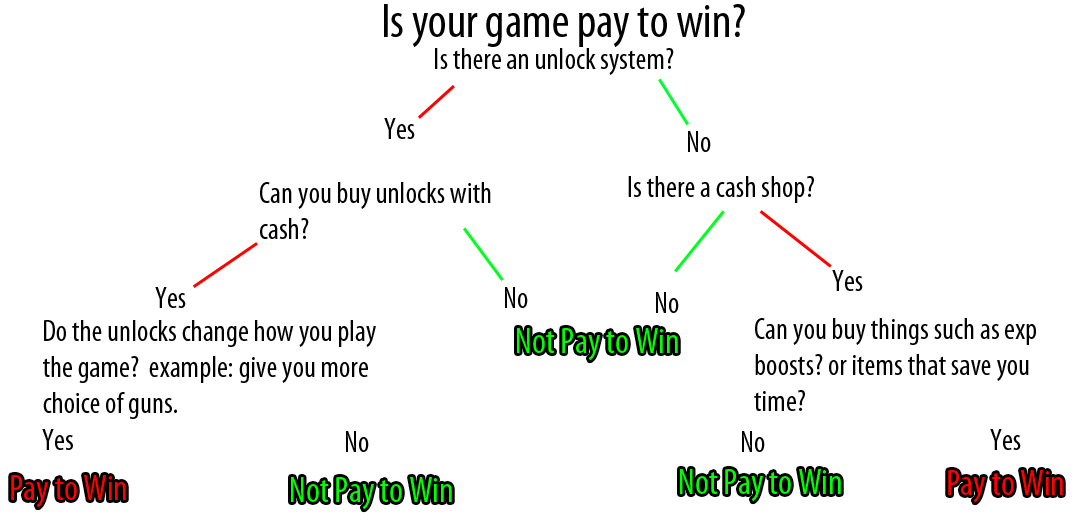
An easy flow chart that shows the consideration to many new, free to play game polices.

There are also balance issues with downloadable content that forces players to spend money to allow them to feel competitive during multiplayer.  A great example would be from Fight Night Champion, where players who had pre-ordered the game received a bonus pack that allowed them to boost their stats and skills that entering players did not have a chance against opponents who had an experience point boost.  Players could also purchase the boost for a sizable fee at the time.  Mutliplayer had earned the title of "Pay to Win", which many free to play Massive Multiplayer Online games face.  This kind of model promotes the decline of a fair, competitive market and teaches players that if they spend more money than another player, that will trump skill.  The more money spent on these products tells publishers and companies that if they release more content like this, players will be willing to pay for their advantage over their opponent.

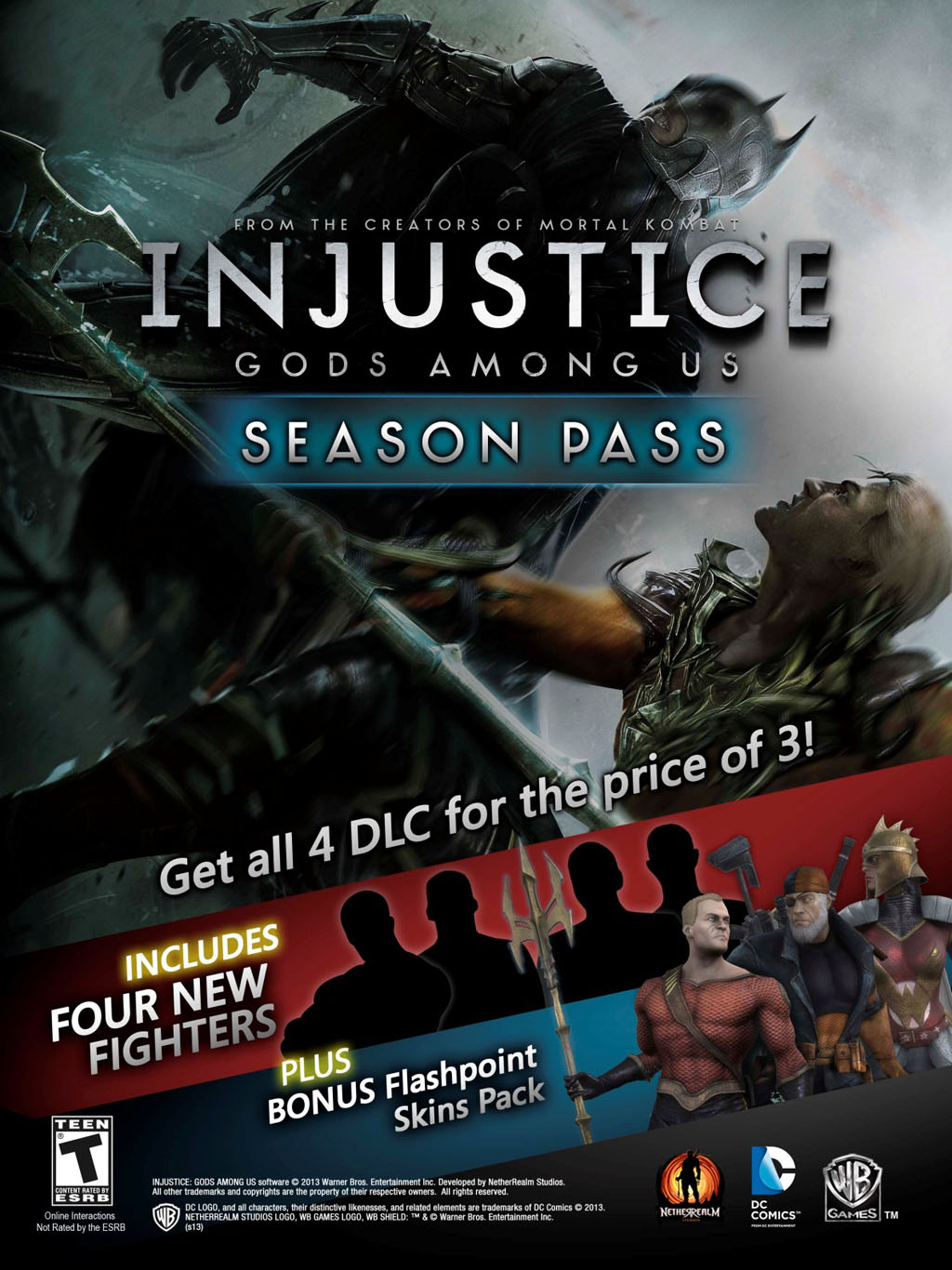
$15 for 4 characters, instead of $20 for 4 characters.  Don't worry, none of them will be game breaking...

Trends have been the main reason why DLC, "Pay to Win" content, On-disc DLC and "pre-order specials" have dominated the market.  The newest trend right now is the "Season Pass" or paying a smaller fee to have access to all of the DLC when it is released. The first game to introduce a season pass was Rockstar's game, L.A. Noire.  When it was introduced, it would only cost players $12 to have all of the DLC accessible to that player when it was released, saving a total of $8 (total price for single purchases would be around $20).  Other games would begin to follow this trend, like Borderlands 2, Battlefield 3 and 4, Call of Duty: Ghost, Telltale's Walking Dead and many others.  Season passes will more than likely continue to dominate the field until someone finds another way to milk money out of gamers, maybe by having then pay to access their console's market or even Netflix.

Said every game company ever.  Now if only said game companies would release a demo and not rely on hype to sell a bad product.

As DLC became a dominant factor so did the rise of piracy.  The two most pirated games of all time are Starcraft II and Spore.  Spore suffered pirating due heavily restrictive digital rights management and then poor customer service.  Spore limited installations, three and eventually up to five computers, required ten-day authentications and was supported by EA Customer Support.  Startcraft II had its own issues.  The biggest complain was the demand that the game had to be played via battle.net and was always online.  Once there was a hacked version that allowed offline play, piracy rates began to grow more and more rapidly.  Starcraft II would eventually become the most pirated game and in response Blizzard finally offered an offline mode, but still required players to log in.  DLC has also become the target of piracy, especially due to the prices or even content.  Skyrim, Mass Effect, Borderlands (and its sequel), have all been recent targets to piracy.

New game! Already leaked.

Another big hit coming out next week, Watch_Dogs (May 27th, 2014) has become the target of piracy due to its controversial releases.  Currently, to this date, Watch_Dogs has more than nine releases coming out and none of them have all of the content available.  The outrage for nine separate releases not only angered the community but it also led to people finding leaked copies of the game and thus continues the cycle of DLC, DRM, Piracy. Currently there are gamers that are streaming the game on twitch.tv, and twitch delivered a warning, because it was breaking several NDAs by having players stream an unreleased game.  This certainly speaks volumes as the game is already being streamed with a little over four days from release and over the month of June the game will eventually be pirated.

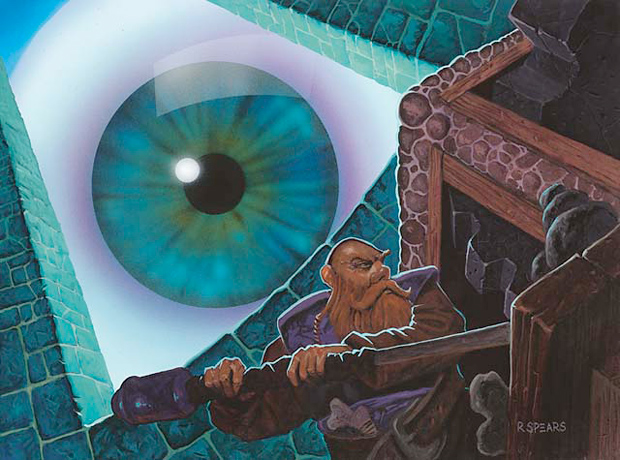
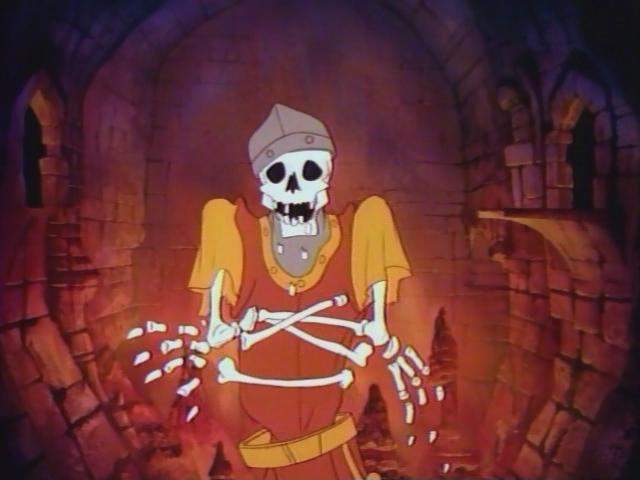
And here lies Dirk, Don Bluth's video game mascot.  See how well he represents the current generation.

Piracy, DRM and DLC have all seemed to flow together post 2003.  With the rise of speed and power of the Internet came the demand for constant content, this content would later devour the idea of full expansions and be piece-meal adventures, characters, skins that companies could make anywhere from $2 to $20 on.  The Internet also forced companies to act out against the rampant piracy by establishing harsh digital rights management ideologies, which promoted piracy of their products.  In the process of all this, the only thing that has suffered has been the quality of video games.  Call of Duty has not presented anything new since Modern Warfare (Call of Duty 4); the First Person Shooter genre is stagnant and has not presented any creativity since CoD: Modern Warfare had hit the shelves.  Strategy games have become simplified, roleplaying games no longer create intriguing characters, story lines.  They have literally become "yes, this is bad or no, this is good", leaving no room for moral ambiguity.  As the years go by, I find my self clutching to more free to play games and older games, where their "complete" editions have been released or where mods are free and easy to attain.  What will the future hold for the industry in the next five years? We could almost expect limited licenses at this point, where your game will expire after a certain duration.
Tuesday, May 20, 2014

Fato Stellarum: A Black/White Constellation Deck

Motivation

As the planet revolves around the stars in a never ending cycle, the stars also follow their own orbit.  These stars, as the Greeks watched over them with awe, eventually became memorable figures based on their mythology and called them constellations.  These constellations marked both the fall of heroes or terrible beasts.  Journey Into Nyx unleashed these constellations of their own, as these same great heroes and terrible beasts now walk on the Plane of Theros damning and boosting foe and enemy alike.  The stars have forseen the fate of your opponent and plans have been put into motion as the Fato Stellarum (fate of the stars) deck will soon reveal their only fate is submission.

Deck Contents

Land (22)
Creatures (29)
Spells (9)

Total Cost: $32.15

Ways to Improve the Deck

Land

Creatures

Spells

Potential Sideboards:

Strategy of Play for Base Deck:

The key to success to this deck is having a strong starting hand: Three mana (1 swamp or plains, the rest filler), an Underworld Coinsmith and one Grim Guardian.  Any of your other cards can be of any variety, but as long as you have a solid hand like that, you will begin to notice your constellations rolling.  If your hand comes with two Grim Guardians, Coinsmiths or Nyx-Fleece Rams you would have an exceptionally strong start.  Rams will prevent early aggressive play and allow you to burn your mana on your Coinsmith for aggressive early play.

There are several card combos in this deck that allows your constellations to constantly roll out besides standard enchantments and creatures.  When the Forlorn Pseudamma untaps, you may pay three mana (1 swamp and 2 colorless) to place a 2/2 Enchantment Zombie card in play.  With two Pseudammas in play you can trigger all of your constellations twice for six mana (2 swamps and 4 colorless).  On top of that combination, you also have a strong synergy with Dictate of Erebos and Eater of Hope.  When you spend for Eater of Hope's three mana ability (1 swamp and 2 colorless) you must sacrifice two creatures, our zombies, and you can destroy a target creature your opponent controls.  When Dictate of Erebos is in play, your opponent will be losing three creatures for a total of nine mana every round (3 swamps, 6 colorless).  

Not only does this create an opening in your opponent's defense, but combined with Doomwake Giant, you can clear most of his defense by reducing their effectiveness by -6/-6 when two of your zombies come into play.  For larger creatures and flyers, your choices are using Akroan Mastiffs, Oppressive Rays, Banishing Light, Skybind (for non-enchantment flyers) and finally Eater of Hope.  You can easily shift into aggressive play by using your control spells to prevent your opponent from having creatures in play, but thanks to Dreadbringer Lampads and the Forlorn Pseudammas you have a potential of having six creatures in play that have Intimidate.  This allows for heavy pressure against any non-black deck.

Conclusion

The deck has two weaknesses: Being milled by a Blue/Black deck and flyers. This deck was built on a dream of a five color Constellation Deck that just didn't seem to work, but you can easily build a Blue/Black, Green/Black, Green/Red or even Blue/Green Constellation deck.  I would not recommend White/Red, simply because their constellations are not fantastic.  White only has access to two Constellation cards while Red only has access to one Constellation card, which does not build a strong synergy.  In a Red/White Aggressive deck, you could easily sink in the Red Constellation, because it allows Bestow creatures to "nuke" when coming into play.  Otherwise, the deck itself is a little slow, but it does allow you to stall out the game and aggravate your opponents by slowly seeping away at their life, until you can land your coup de grâce.


All prices were checked at http://www.tcgplayer.com/.  Here you can browse for the price of cards and get a general idea of your deck/collection of cards.

Monday, May 19, 2014

Constellations: Where Every Card Causes Chaos

"Let Heliod's light banish this false god!"
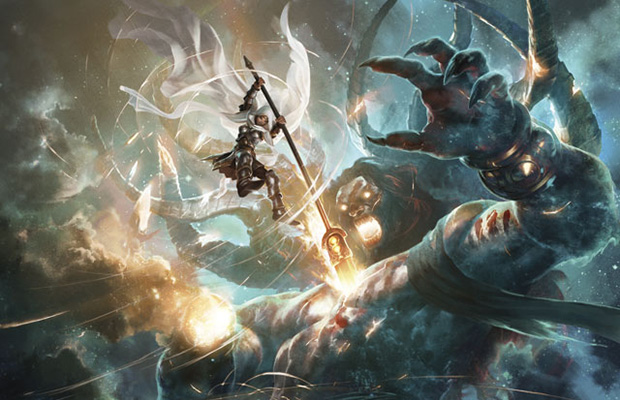
Of all the great revelers, there was one who would stand above the rest.  Xenagos, a planeswalking Satyr, deemed that it was his time to ascend to godhood and force the old pantheon to accept his transcendence.  This angered many of the gods, but more importantly Heliod, the God of the Sun, and he summoned Elspeth to prevent Xenagos from becoming a god.  In Born of the Gods, Xenagos ascends and the realm of Nyx is ripped open allowing creatures and people that were born in that realm to seep into Theros.  These creatures are unlike their counterparts, even in their card art [see above], and come into Theros as Enchantment Creatures.  In the final part of the series, Journey into Nyx, Xenagos is slain by Elpseth with her powerful spear, The Godsend, but the entrance to Nyx begins to let living constellations walk onto the plane of Theros.


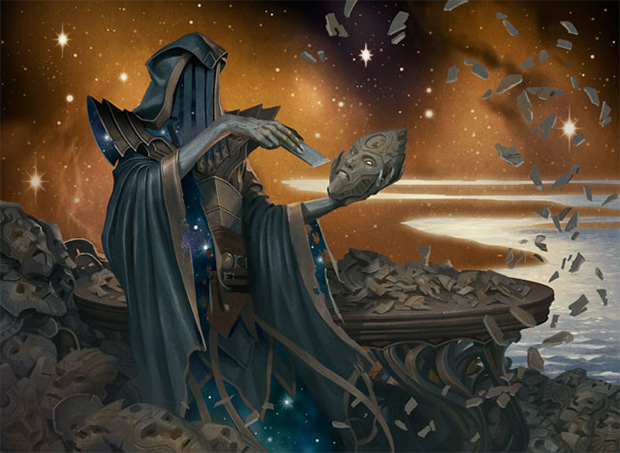
"Coins of the Underworld are shaped from clay funerary masks." -Underworld Coinsmith

Constellations enchantments and creatures were released with Journey into Nyx and come with very interesting abilities.  The most defining part of these cards is that they trigger off of other copies of themselves or another enchantment.  For example, when looking at the Underworld Coinsmith his ability dictates that whenever another coinsmith or another enchantment comes into play, you gain one life.  His pay ability is fantastic because you remain at the same life value, while everyone loses a life.  Another fantastic Constellation card that has complete synergism with the Underworld Coinsmith is the Grim Guardian.


The Grim Guardian functions as a basic counter to early aggression, but also has a combined function of dealing damage to your opponent every round.  His constellation ability triggers like any other, a copy of himself or another enchantment comes into play, but every opponent loses one life.  Combined with the Underworld Coinsmith, you are looking at a potential of an additional life and the opponent has lost one life when this card first comes into play.  This continues to snowball the second you have a copy of Grim Guardian in play.  With two Grim Guardians, you gain one more life and opponent now loses two life for every enchantment played.


That's the major idea of Constellations is synergy.  These guys practically ooze synergy to the point where you will be tearing down your opponent's front lines, life pool, their hand and even their deck.  There are also defensive Constellation cards like Harvestguard Alseids, which prevent all damage that would be dealt to target creature this turn, whenever an enchantment is played.  This allows you to freely throw your creature out on the field at your opponent.  Not only does this allow you to trigger Inspire on your other creatures next round, but it also threatens opponents by either taking damage or losing a creature.   Though there are two crown jewels of this set: Skybind and Eidolon of Blossoms.


Skybind, much like Oblivion Ring and Banishing Light, functions as a removal spell.  This one allows players to bounce a big creature off the battlefield and prevents your opponent from swinging at you with non-enchantment creatures or permanents.  The problem with this is that there are a ton of enchantments in the Theros Block, but it does allow you to exile land, artifacts and usually large creatures.  Combined with Banishing Light you can technically remove two permanents from the game (one round of course with Skybind) allowing you to gain an advantage.  Now let's consider the best Constellation card of the set, Eidolon of Blossoms.

Eidolon of Blossoms is a reprint of an older card known as Enchantress's Presence. Whenever an enchantment is played you may draw a card.  With two of those on the field with a green deck focused on either Bestow creatures or Constellations, you could be drawing 2-8 additional cards a turn.  While you suffer a chance of milling yourself with that combo, it does allow you to gain card advantage and maintain tempo versus your opponent.  The current meta for Eidolon of Blossoms is to run it within a Black/Green Constellation/Enchantment deck. Another set of cards that come out in almost core set are Slivers.  If you read my first post, you'll know that I have some personal grudge against Sliver decks and it's dominantly because of their perfect and infinite synergy.


Slivers have always been part of Magic the Gathering.  While it is nearly impossible to depose them for being the kings of synergy, Constellation is not far behind.  Slivers can boost each other to excruciatingly high levels of pain and annoyance in five to six turns.  In Legacy some Slivers are immune to counterspells, cannot be target of spells, protection from one or two colors and are 4/4.  Nothing can fully dethrone Slivers either, in Magic 2014 slivers seemed to come back in full force.  While Constellations are coming of age, there are currently only sixteen in the current release versus the innumerable amount of Slivers that many players can choose from.  All in all, I hope in the future of Magic the Gathering that we see more constellation cards being released, but it is more than likely it will remain memories within the Theros Block.

Sunday, May 18, 2014

Alignments and How They Ruin Games

Whenever you need to justify your actions, why not Zoidberg?
Alignment Charts:  if you have seen one of the memes or have played Dungeons and Dragons (from AD&D to 3.5/Pathfinder) then you know what they mean.  While most of the memes accurately depict characters from television shows to comics, most of the time they do not accurately depict D&D characters, because players either exacerbate one or two ideas of the alignment instead of playing at the multitude it allows.  Two tabletop examples are Chaotic Neutral and Lawful Good.  Another issue comes down to when a player's actions should shift alignment and when is it alright for your character to make these actions.  While that is dominantly based on your DM and how rich the roleplay is in your campaign, alignment shifts should have meaning, even if a character is atoned to change alignment.  Curses and such are a much more rapid effect, but a player can roleplay the differences in either gradually or instantly.  So let's cover the two most well known instances of how alignment can be used terribly during a standard Dungeons and Dragons (or Pathfinder) game.

Chaotic Neutral's horrible nickname is Chaotic Stupid.  In games I have run and played in, players tend to take the Chaotic Neutral as a logical reason to avoid all law, rummage around the town and kill anyone who doesn't agree with them.  They burn down orphanages, steal food and clothes from children and murder and maim party members whenever they can.  Does that mean they are playing the character wrong? No, not at all.  It is obvious that they wanted to play Chaotic Evil and their Dungeon Master had either declared "No Evil" or the player really doesn't understand how Chaotic Neutral works.  Chaotic Neutral is about being free from laws, completely, and ignoring the mandates of kings and lords.  It is the ideology of the bandit; the idea of ruling over yourself.  In comparison to Chaotic Good, a character would break laws to benefit someone he doesn't know or knows very loosely to hopefully make their life better.  A Chaotic Evil character despises laws, fights dirty in combat by using nefarious purposes to get an advantage and sometimes hungers for blood.  More importantly greed can be considered part of Chaotic Evil, the reason behind this is due to Chaotic characters acting on impulse.


On the other spectrum of alignments we have Lawful Good.  Lawful Good is usually dominated by the Paladin character class and where Chaotic Neutral attracts players that tend to perform horrible acts, sometimes players who play Lawful Good perform these same actions.  Lawful Good characters hold the exemplary ideals of a true hero: Just, follows the laws and rulers, even if these rulers are unknown evils and help the common man in times of need.  A Paladin, and the Inquisitor in Pathfinder, have Detect Alignments or in this case Detect Evil.  Some players abuse these forms of detection and claim that any evil performed therefore dictates that a non-player character, monster or chicken must be pure evil.  The problem comes down to the spell Detect Evil.  Detect Evil shows that the more evil a subject is, the more powerful the subject is and the greater the evil or good aura that creature possesses.  One of the major problems happens when a party Paladin uses Detect Evil on his party and finds out that someone is Evil.  The problem comes down to how the Dungeon Master handles the situation.  Does your DM allow for hostile party actions? If yes, then that leads to problems in itself.  If not, the spell states clearly that only Demons, Undead, Devils, Clerics, Paladins (and Anti-Paladins) and finally Blackguards have auras.  Other classes do not have an aura and emit a smaller blip, but not enough to mark them any worse than a child stealing an apple from cart or a merchant lying and selling fraudulent items.

While your party is debating the ever-intricate parts of how the Lich had created an orphanage as his phylactery, you question who is making the campfire for tonight.
Alignments are tricky and while they are a vital part to a character they should not be the defining point or core concept to your character.  Some characters, by class, are forced to take certain alignments. Druids are forced to be any aspect of Neutrality, Paladins must be Lawful Good, Barbarians are any non-Lawful.  Monks on the other hand are Lawful.  So, let's cover what all of the alignments mean in one sentence to get a "complete" idea of how they ideology works:
  • Lawful Good: An avatar of justice and strong-arm of law, you follow laws and edicts to create an example others can follow.
  • Neutral Good: Where laws and chaos meet, you cherry pick when you accept and follow laws to do what is right.
  • Chaotic Good: Laws and edicts slow down others, so you act without delay to help those in need without worrying how your actions will be seen by guards, rulers or archaic traditions.
  • Lawful Neutral: Laws are in place for a reason, you follow them and others should too, and those that break the law should be punished.
  • True Neutral: You are like a leaf in the wind; some days you are seeking to help others and then the next day you are hunting down a trusted friend.
  • Chaotic Neutral: Laws and regulations stifle everything you stand for and those that oppress deserve to die.
  • Lawful Evil: Laws are finite and if you have broken any edict, then you must pay for crimes accordingly.
  • Neutral Evil: Blood-thirsty and willing to let other fails as long as you advance, you exploit every method possible to advance.
  • Chaotic Evil: You are ultimately power-hungry and when you are challenged poison, traps, assassins, destroying someone's reputation or killing their family is not below you.
And for some consolidation here are some character concepts that work efficiently with certain alignments:
  • Lawful Good: Crusader, protector, mentor, leader
  • Neutral Good: Doctor, guard, teacher
  • Chaotic Good: Vigilante, bounty hunter
  • Lawful Neutral: Judge, mediator
  • True Neutral: Anything your heart wishes (depending on class restrictions)
  • Chaotic Neutral: Bandit, bounty hunter
  • Lawful Evil: Torturer, executioner
  • Neutral Evil: Serial Killer, vigilante (Dark Knight-esqe), scam artist
  • Chaotic Evil: Murderer, arsonist, assassin 
While judging your character's alignment is the hardest task in Dungeons and Dragons, don't let it prohbit you from making your own ideal character.  A Ranger that is Lawful Evil and has favored enemy as humans could be considered a bounty hunter who chases down those of his same kind for money.  He doesn't fear killing people and if the bounty reads dead or alive, you would expect the prior to the latter.  Another example would be a Neutral Good Rogue who breaks open cellars to make enough money to house a npc friend who has a gambling addiction.  There are many ways to make your characters, but remember: No one likes Chaotic Stupid and no one likes the Lawful Stupid Paladin.  Branch out and discover new archtypes, ideas and concepts that you want to play without ruining the fun for everyone else.

Thursday, May 15, 2014

Why I was Disappointed with The Amazing Spider Man 2

"And only you can prevent random street muggings...and super villains."

I should start off with the obvious and say with large font: SPOILERS.  

Introduction

The Amazing Spider Man 2 had a strong premise with trailers promising a battle royale between Spider Man and his iconic adversaries: Papa Smurf, Mecha-Alpha-Rhino and First-World-Problems-Goblin, but all of that had fallen short after the first hour of the film.  Jamie Foxx's character, both the scientist and his villain alter-ego, Electro, were fantastic and very like-able.  Foxx had presented a strong character that presented a strong sympathetic remark. While the same could also be said about Harry Osborne and his role as the Green Goblin, I found that it fell short near the end of the film.  Finally the romance in the movie was awful. It awfully reeked with a familiar tinge with hallow remarks and sentiments, empty, emotionless lines and obviously catering to teenage romance novel readers.  The "Teenage Romance" motif is one of the greatest downfalls to the film.

Teenage Romance

The first notion of the failed romance between Gwen Stacy (portrayed by Emma Stones) and Peter Parker (portrayed by Andrew Garfield) was the terrible, haunting flashbacks from the first film.  In the first film Gwen's father was killed on top of the Oscorp building, but before his passed away he forced Spider Man, who he had discovered was Peter Parker, to promise that he would never see his daughter again.  This continues to exacerbate their "romance" throughout the whole film as Peter Parker/Spider Man fight off PTSD hallucinations of Gwen's father giving the 100-mile stare.  Another example of the romance failing in this film is when Gwen officially "breaks up" with Peter, her lines were literally:
"I break up with you Peter Parker.  I break up with you.  I break up with you Peter."
And after Peter was dealt such serious blows, he runs back to his home only to be followed in the next scene as Spider Man stalking Gwen Stacy throughout New York.  Later in the film Gwen Stacy has one of the worst lines I have ever heard, "I choose you Peter Parker!"  This over-the-top acting begins to detract from the action of the film as the romance eventually leads to the death of Gwen Stacy as she helps Spider Man defeat Electro and is quickly snatched by Harry Osborn, who doesn't need to hide his face...obviously because everyone knows who the Green Goblin is.  Peter attempted, with every inch of his spider-fiber, to save her from a fall, but she collides with a concrete floor and kills her on impact. 


The problem comes with the weak acting and script.  The film doesn't really portray the strong romance that Peter Parker and Gwen had, the script seemed to be bumbling around and the acting was a debacle.  If it was done right the romance would have really spurred the film to another level.  On the other hand, Gwen Stacy felt like a standard "Lois Lane" character.  She's there for minor plot development, minor story and finally a shoe-horned-hardly-dramatic-five-month-mourning-montage.  Yes, that is right.  The ending of the film, much like Spider Man staring Tobey McGuire, had the cast mourning at a funeral over a main character of the film.  The problem is, is that if it was done in a Rocky Film it would not have felt like wasted time.  The romance in the film was lackluster and while it is an integral part to Spider Man and his story, the film had made the death feel inconsequential.


Characters

The four characters I want to talk about, and how their roles succeeded or failed, are Electro, Rhino, Spider Man and finally the Green Goblin.  Jamie Foxx played one of the best, most sympathetic roles he could find with in the Spider Man universe.  Max Dilion (Jamie Foxx's overtly nerdy, socially forgotten scientist) was an employee of Oscorp and of course was forgotten completely and walked upon both on the streets and in the work environment.  This creates a social dynamic where he begins to worship Spider Man, because Spider Man had saved his life and told him that "...One day, I'll need your help..." This creates a unique psychosis within Dillon, because he believes that Spider Man is his best friend, bakes him a cake, wishes him happy birthday and practically worships Spider Man for his good nature.  Incidentally, he is working on his birthday and like a synonymous metaphor, falls into a pit of mutant electric eels that bestow him his powers.  In the core comics of Spider Man, Electro did not work for Oscorp, he worked for a power plant and worked on power lines for that company.  There was a freak accident at work and that's when he gained his powers.  Though he could not harness his powers until he stole technology from Stark Industries.

Electro from the Ultimate Marvel Universe
Rhino on the other hand was hyped through the trailers and had a total screen time of no longer than ten minutes.   Essentially a Russian criminal and altogether nefarious individual, he had gained his suit from Oscorp.  The character himself, Aleksei Sytsevich, is the overly stereotypical tattooed donned, bald-head, pierced individual that wants nothing more than to steal Uranium.  The movie had granted him his powers through an Oscrop suit, while in the comics he was given his powers through gamma radiation, hired as a mercenary to stop the Hulk, but continuously fails his objective.  So keep in mind that in the comics, the Rhino is a gamma-radiation super human trying to bash Spider Man's head in almost every panel.

Spider-Man on the other hand suffered issues throughout the film.  While Andrew Garfield makes a fantastic Spider Man, his portrayal of Peter Parker denotes him as the standard skater kid from high school during the first film.  In this film however, they show the more inventive and tinkering Peter Parker while having Spider Man throwing his puns and quick quips every moment he can.  This helps creates a more satisfying portrayal of Spider Man and Peter Parker.  The main problem comes from the conflict of Peter Parker searching for the truth about his father.  Surprise, surprise when he spends 60% of the film creating a web of documents and strings linking fact to fact in attempt to find the answer and then winds up empty handed.  When he does discover what his father's research was, big surprise that Oscorp was using that research for military grade weapons.


The Green Goblin, or Harry Osborn, was portrayed by Dane DeHaan and his role in the film is fine as a catalyst of revenge, pride, and finally rage.  DeHaan's character was introduced as coming back from a private school and discovering that his father, Norman Osborn, was dying from a terrible hereditary disease.  The disease begins to manifest, surprise- right around Harry's age, and eats the flesh of its victim.  So, through some not-so-clever plot devices Harry is ejected from Oscorp and loses access to his family's business.  He also gets the idea, after looking through a "secret projects" section in his company's files, to unleash Electro from the super-Nazi-science-mental-experimentation-hospital to help him take over Oscorp and kill Spider Man.  My major problem with this rendition of the Green Goblin, is that Harry himself was a very likable character and only became angry at Spider Man, because he discovered that "Spider Man's blood might be able to cure his terrible disease," but Parker rejects for the reason that his blood might kill Harry instead of help him.  Harry eventually discovers, over one short minute, that Peter Parker and Spider Man are the same person, leading to Gwen's death.

Conclusion

The movie in general held a very mediocre taste.  The action scenes were fantastic, but the romance was horrible.  The villains were memorable, but promise a battle against the Rhino and quickly left it as a cliff-hanger for another movie is one of the worst things you can do in any movie.  It presents a hope that this movie has done so well that obviously there should be a third movie, instead of ending the movie on a high note and making the movies independent from each other.  One thing that would drastically improve the quality of the film would be just one cliche line.  There were so many points in the movie where, just one "Damn you Spider Man!" could have made the movie more enjoyable.  The problem is, instead of venting rage through cliche monologues, we get alcoholic rages.  All-in-all, the film was mediocre compared to Captain America: The Winter Soldier and I would skip it entirely or wait for a Dollar Theater release and form your own opinion about the film.

Overall Grade: 6/10- "I BREAK UP WITH YOU PETER PARKER!"