 |
| I think we can all remember this debacle. |
Every year there is a new Call of Duty that promises the new changes or self-proclaimed revolution to the industry and every year they release a game with handfuls of downloadable content (DLC), cut content and map packs. The industry continues to promote the grand scale rip-off of every product because they are allowed to. On top of DLC or even the promise of, promotes buyers to pirate the game, because gamers, PC users, are tired of paying $60 for half of the full product and then being charged $10 to $15 more for every other cut feature. A fantastic example of cut content is Diablo III, where the
Mystic Myriam was promised on release and then removed, due to the customization being labeled as "redundant". She was later released in Reaper of Souls as expansion exclusive content. The demand for DLC is becoming a phenomena that started with the growth of Expansion Packs of the early 1990s. These packs expanded on current content of the game and allowed players to play their older games through new content that either elaborated on story line arcs, multiplayer aspects or by adding new features into older game content.
 |
| Considered one of the greatest expansions in video game history. |
Growing up in the '90s, I had access to what some people called the Golden Age of Gaming. Before the internet we had to share games by lending physical copies. During the mid to late 90s, CD burners were becoming more and more prevalent in society and they allowed us to copy games from one CD to another by copying an image from one CD and imprinting it on another CD. The average speed for burning a game would be anywhere from one hour to two. So we'd trod around ranting and raving about how great a game was and then went off playing multiplayer with our newly created CD. This led to the very first protection video game companies were forced to enact: CD keys. These unique keys would only allow one person to have an installation and any copy of that key would prohibit multiplayer unless everyone else had a unique CD key. As the late 90s progressed it was a slow process for video game companies to keep up, so they would push CD-Rom burn protections and other precautions that would begin to dominate the environment. What the world did not expect was the birth of the Internet.
 |
| A fitting picture that describes the main conflict with today's market. |
The Internet had allowed people to share CD key generators, download links, hacks and cracks and other processes to copy their games or get them for free. This was met with an ever expanding outlook of Digital Rights Management (DRM). DRM has become so prevalent now in our society that people are stretching out to fight against it. Examples of modern DRM are: Only-Online Play, Online Pass keys, "Leasing the software" and also limited installations. As DRM raised restrictions, game companies began to release DLC. The first DLC on personal computers was for a strategy game called "
Total Annihilation", a strategy game released in 1997, and they would release a new unit every month. In 2002, this trend would change completely as Microsoft had released the first DLC to have a price tag attached to it. The game was called
Mech Assault, which focused on the Battletech or Mechwarrior Universe and functioned as a third person shooter. Due to its huge success, other companies began to follow in suit as Mech Assault's success meant that their games could be successful by following this method. One of my first frustrations with DLC came from Dragon Age: Origins.
 |
| Every pre-order promises goodies that reward people for purchasing the game early. Good thing it alienates the other part of the community who did not pre-order. |
Now don't get me wrong, I loved the original Dragon Age: Origins as a solid roleplaying game, but my major issue was the areas that would prompt you for a quest and later tease you that you can only access this area if you pay $10. The frustration with that comes down with the core reasoning that I had spent $50 on a new game and then I am prompted after about an hour and half worth of play time that I need to spend $10 more to have access to all of the content available. That alone leads to the problem of "pre-order" content and "on-disc" content that is locked. "Pre-order" content has become one of the most aggravating forms of commercialism to happen to games. Your choice as a gamer now is either pre-order and not have to shill out $10-$20 more or wait for a "complete" edition to come out. That leads us to one important point of quality, if you do not pre-order, you do not receive the full game unless you pay an additional fee. Therefore, most games now run for $70-$90 if you do not pre-order or wait for the "complete" editions.
 |
| Imagine if movie theaters began to charge you for seat rental. That's what On Disc DLC feels like. |
Another issue with DLC is the ability to purchase keys to unlock content that is already on the disc. One of the biggest culprits was Capcom's release of
Ultimate Marvel vs. Capcom 3. Capcom was challenged by their audience when they were called out for having two additional characters locked away on the disc and demanded that players pay $10 per character to have the character and their skins unlocked. These characters were Jill Valentine, who appeared in the Resident Evil games, and Shuma, a previous fighter from Marvel vs. Capcom 2. This tradition would continue even after the release of Ultimate Marvel vs. Capcom 3 and rear its ugly head in future Capcom games like StreetFighter X Tekken and Resident Evil 6. Other companies like Sega, Namco and even Nintendo have used on disc content and forced players to pay for unlocking the data. After the debacle, Capcom had lashed out at gamers claiming that the
reason they had on-disc DLC was due to the compression size and allowed for "easy compatibility for players".
 |
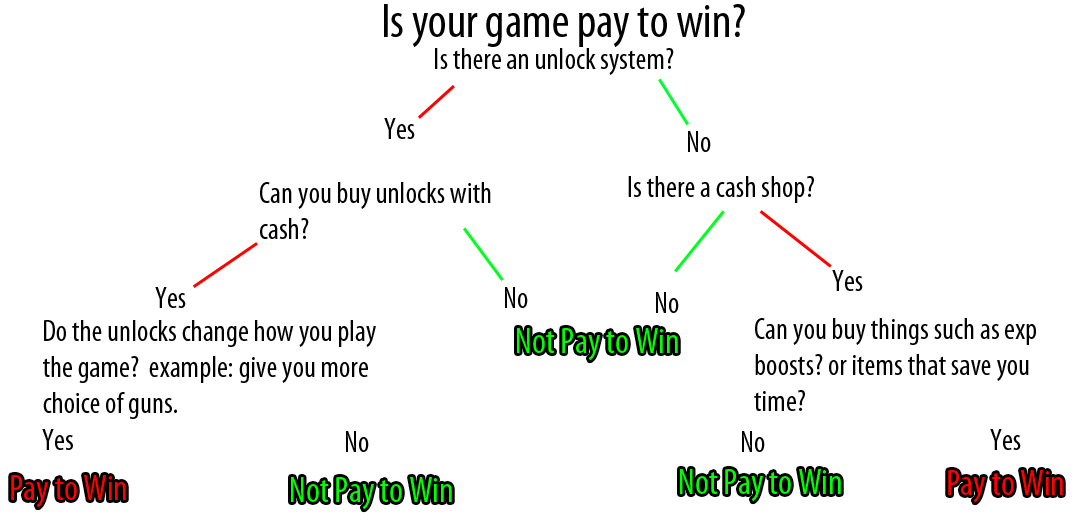
| An easy flow chart that shows the consideration to many new, free to play game polices. |
There are also balance issues with downloadable content that forces players to spend money to allow them to feel competitive during multiplayer. A great example would be from Fight Night Champion, where players who had pre-ordered the game received a bonus pack that allowed them to boost their stats and skills that entering players did not have a chance against opponents who had an experience point boost. Players could also purchase the boost for a sizable fee at the time. Mutliplayer had earned the title of "Pay to Win", which many free to play Massive Multiplayer Online games face. This kind of model promotes the decline of a fair, competitive market and teaches players that if they spend more money than another player, that will trump skill. The more money spent on these products tells publishers and companies that if they release more content like this, players will be willing to pay for their advantage over their opponent.
 |
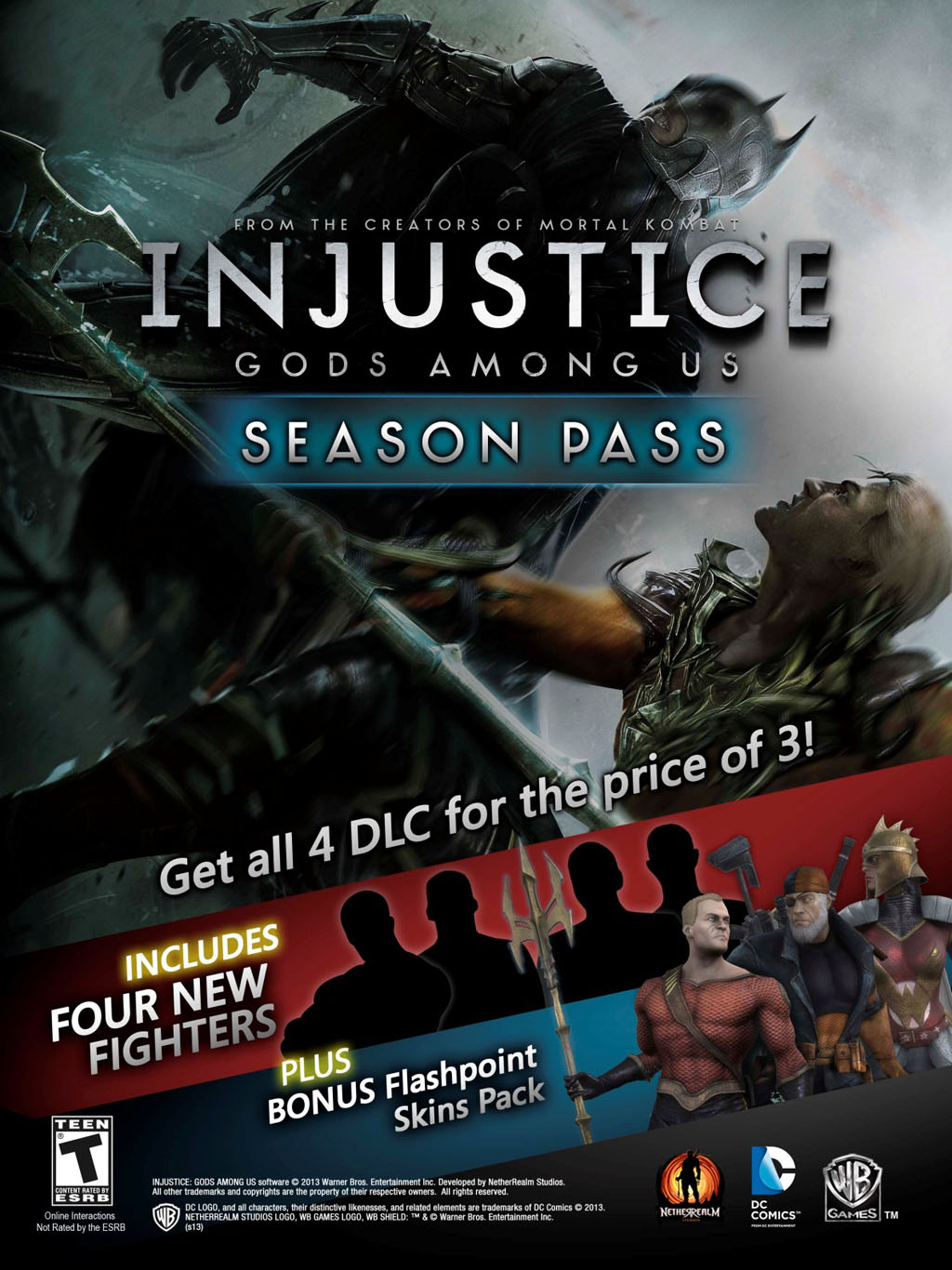
| $15 for 4 characters, instead of $20 for 4 characters. Don't worry, none of them will be game breaking... |
Trends have been the main reason why DLC, "Pay to Win" content, On-disc DLC and "pre-order specials" have dominated the market. The newest trend right now is the "Season Pass" or paying a smaller fee to have access to all of the DLC when it is released. The first game to introduce a season pass was Rockstar's game,
L.A. Noire. When it was introduced, it would only cost players $12 to have all of the DLC accessible to that player when it was released, saving a total of $8 (total price for single purchases would be around $20). Other games would begin to follow this trend, like Borderlands 2, Battlefield 3 and 4, Call of Duty: Ghost, Telltale's Walking Dead and many others. Season passes will more than likely continue to dominate the field until someone finds another way to milk money out of gamers, maybe by having then pay to access their console's market or even
Netflix.
 |
| Said every game company ever. Now if only said game companies would release a demo and not rely on hype to sell a bad product. |
As DLC became a dominant factor so did the rise of piracy. The two most pirated games of all time are
Starcraft II and
Spore. Spore suffered pirating due heavily restrictive digital rights management and then poor customer service. Spore limited installations, three and eventually up to five computers, required ten-day authentications and was supported by
EA Customer Support. Startcraft II had its own issues. The biggest complain was the demand that the game had to be played via battle.net and was always online. Once there was a hacked version that allowed
offline play, piracy rates began to grow more and more rapidly. Starcraft II would eventually become the most pirated game and in response Blizzard finally offered an offline mode, but still required players to log in. DLC has also become the target of piracy, especially due to the prices or even content. Skyrim, Mass Effect, Borderlands (and its sequel), have all been recent targets to piracy.
 |
| New game! Already leaked. |
Another big hit coming out next week, Watch_Dogs (May 27th, 2014) has become the target of piracy due to its controversial releases. Currently, to this date, Watch_Dogs has more than
nine releases coming out and none of them have all of the content available. The outrage for nine separate releases not only angered the community but it also led to people finding leaked copies of the game and thus continues the cycle of DLC, DRM, Piracy. Currently there are gamers that are streaming the game on twitch.tv, and twitch delivered a warning, because it was breaking several NDAs by having players stream an unreleased game. This certainly speaks volumes as the game is already being streamed with a little over four days from release and over the month of June the game will eventually be pirated.
 |
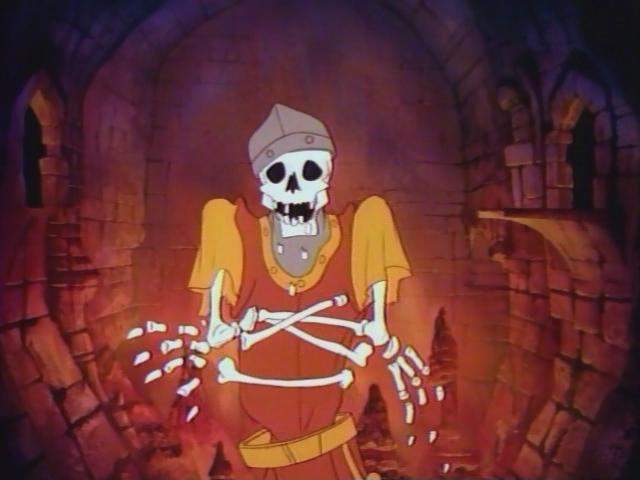
| And here lies Dirk, Don Bluth's video game mascot. See how well he represents the current generation. |
Piracy, DRM and DLC have all seemed to flow together post 2003. With the rise of speed and power of the Internet came the demand for constant content, this content would later devour the idea of full expansions and be piece-meal adventures, characters, skins that companies could make anywhere from $2 to $20 on. The Internet also forced companies to act out against the rampant piracy by establishing harsh digital rights management ideologies, which promoted piracy of their products. In the process of all this, the only thing that has suffered has been the quality of video games. Call of Duty has not presented anything new since Modern Warfare (Call of Duty 4); the First Person Shooter genre is stagnant and has not presented any creativity since CoD: Modern Warfare had hit the shelves. Strategy games have become simplified, roleplaying games no longer create intriguing characters, story lines. They have literally become "yes, this is bad or no, this is good", leaving no room for moral ambiguity. As the years go by, I find my self clutching to more free to play games and older games, where their "complete" editions have been released or where mods are free and easy to attain. What will the future hold for the industry in the next five years? We could almost expect limited licenses at this point, where your game will expire after a certain duration.





No comments:
Post a Comment