
About every decade a new edition of Dungeons and Dragons releases to the public. Some people love the newest edition, while others complain that it is the worst thing to come to famed tabletop game. My first experience with Dungeons and Dragons was Bauldur's Gate and Advanced Dungeons and Dragons (AD&D). I was maybe nine when I first played Dungeons and Dragons and of course my memory is still fuzzy about what had happened outside of being exorbitantly excited and dice rolling. So to be fair, I cannot fully express my adoration for AD&D and Second Edition, but I know more than a handful of people who epitomize Second Edition as being the best set. Truly my infatuation with Dungeons and Dragons began when Third Edition released in 2000. While Third Edition is a love-hate relationship, some will say that it ruined Dungeons and Dragons, others praise it as the Messiah, it had certainly left a mark on many tables and references.
Third Edition
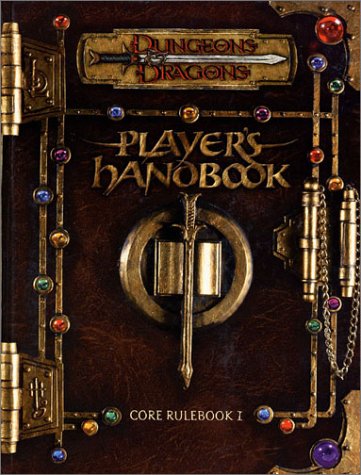
Third Edition had released during the second millennium, we had survived Y2K and my generation didn't really care much about tabletop games. I on the other hand was pulled into the Fantasy genre thanks to Tolkien, The Hobbit or other assorted Fantasy movies like Conan the Barbarian. Third Edition had introduced to the system a unified experience chart, diverse classes (some much better than others), feats and skills and simplified saving throws. Players could rejoice with character specialization through skill points, feat selection and spell selection. A major problem with the game was the unreadable rules for disarming, tripping, grappling and other rules that extended past "I attack the monster". Summon spells would also require the spellcaster to have the statblock nearby so they could reference what their summon could and could not do. Some spells were also labeled as Save vs. Die or Win-Win outcome spells.
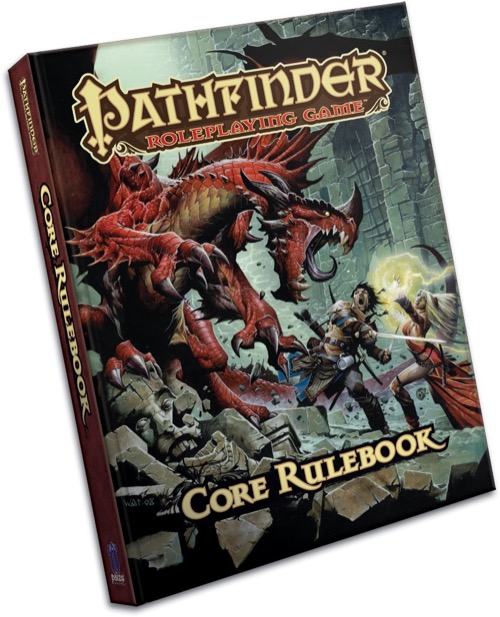
Three Point Five

Three years later (2003), we received a rule revision that focused on cleaning up all of Third Edition. While spellcasters remained extraordinarily strong, other classes that were considered terrible received the Holy Band-aid of Fixing and started to become a viable character choice. Examples of this are skills being condensed, which allowed Rogues to spend points in "more valuable" areas, Ranger received combat styles, but his hit dice was dropped to D8 and finally the Monk received love to be a playable choice. Some of the strongest spells in the game were also re-balanced to help maintain a thin guise of balance between casters and martial classes. This edition still suffered confusing rules when it came to dealing with non-conventional attacks, but it was easily one of the easiest systems to get into as a veteran player.
Three Point Seven-Five
Fourth Edition
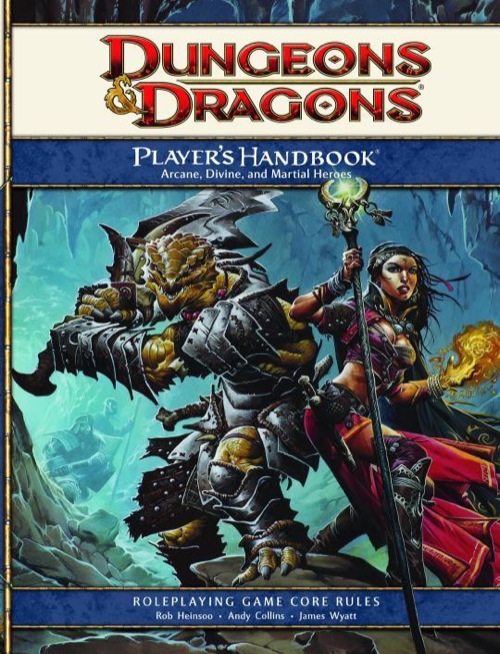
Fourth Edition is World of Warcraft Edition of Dungeons and Dragons. It was released 2008 with mixed reception. Where prior editions were focused more on roleplaying, Fourth Edition focused dominantly on combat. The game itself did not focus on the idea of roleplaying, but more about getting more players interested in Dungeons and Dragons. Characters were separated into different archetypes, I.E. tank, nuker, healer and didn't allow for much focus outside of the combat. The most interesting thing in this edition was that every class had something to do in combat, everyone felt effective and combat could be very challenging. While it has a Dungeons and Dragons name going for it, for combat purpose it is one of the best systems for combat. Combat does not bog down, everyone is useful and everyone has purpose. There are also neat mechanics like pushes and pulls, marking (taunting) and healing for classes that would not normally heal.
Fifth Edition
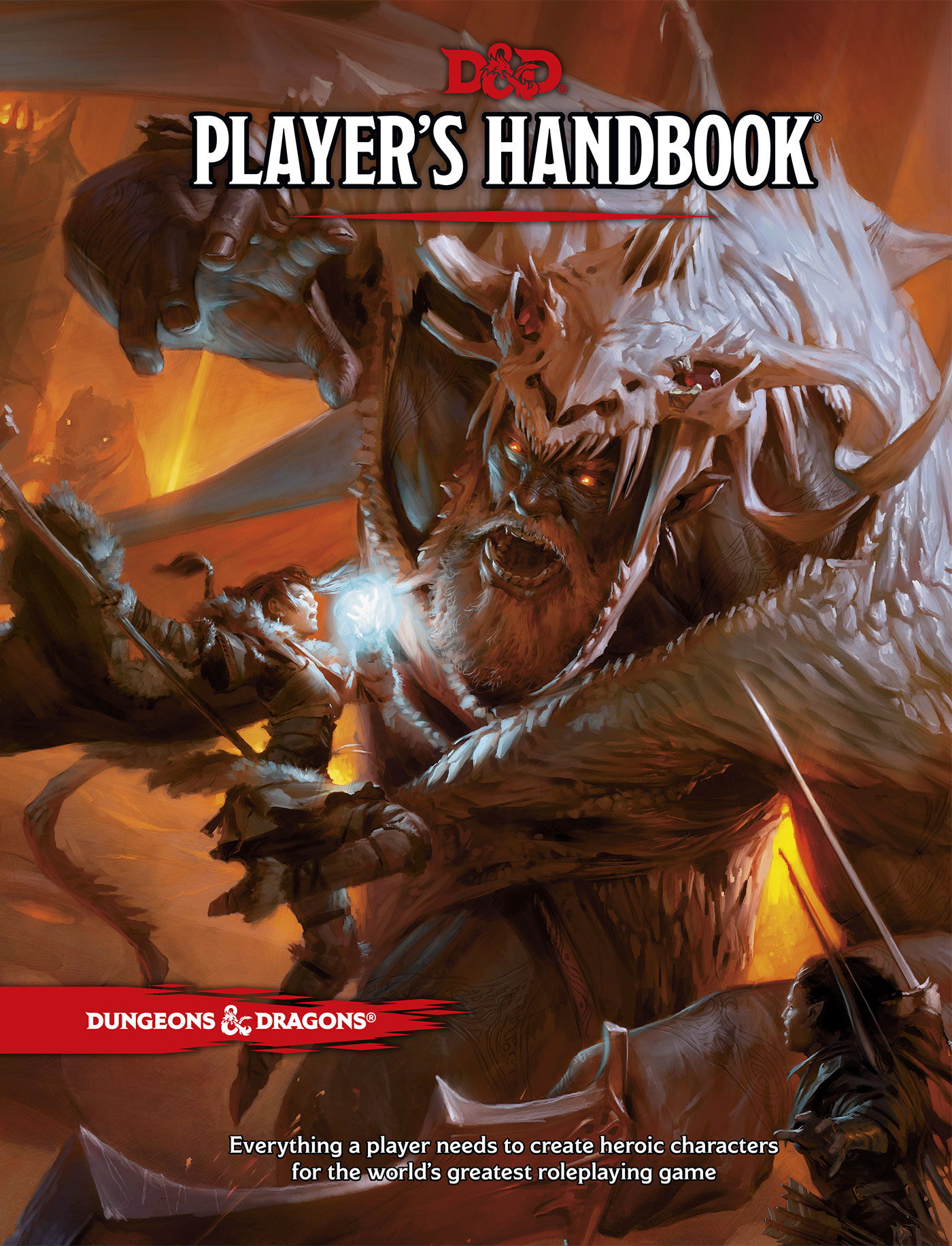
The newest release, which I have yet to play, was released August 2014. Currently the the only book released in this edition is the Player's Handbook and it certainly does not disappoint. The top four things that I am impressed with this system are backgrounds, class re-balancing, advantage-disadvantage and inspiration. The backgrounds do fantastic things for players who are not familiar with Dungeons and Dragons and allows them to randomize their character background. This background then guides you how you character should be played, the best thing of all is that your DM will reward you with inspiration during an encounter, roleplaying session or even combat. Inspiration allows you to roll two d20s and take the best of the two. Advantage and Disadvantage work the same way as inspiration and can happen anywhere. For example, your character falls down a pit, but is where climbing gear and has a rope, you would have an advantage and would be allowed to roll two d20s. Fifth Edition or D&D Next is certainly on my list of games to try out, because it brings back the roleplaying aspects of the older editions while keeping the system simple.
Conclusion

All in all, my heart still sits with 3.X and Pathfinder. Those editions have always been the heart of everything I loved about Dungeons and Dragons and I believe that everyone has their own edition they like. Some of us might have loved Fourth Edition, others still dwell on their memories of Second and AD&D and remember the days of 18/00 Strength and THAC0. While we all sit in our dark dungeons, pondering how to escape the lair of liches, dragons and demons we still find hope that our dice will sit at the top 5%. Do you have an edition you like best? Leave me a comment and tell us a story about how your edition is the best edition.

Once there was a Jebs and he had a blog, but then he stopped posting. The world was sad.
ReplyDelete